
Is Pride and Prejudice Hard to Read? A 14 Day Plan
Is Pride and Prejudice hard to read? See how long it takes, why Austen's irony can feel difficult, and follow a practical fourteen day plan.
Pride and Prejudice is moderately difficult for a new classics reader, but it usually becomes easier after the opening ten chapters. The Lita Book text contains 122,129 words across 61 short chapters. Most readers will need about 8~10 hours. Lita Book’s faster estimate is 7 hours and 30 minutes. Over fourteen days, that means roughly 30~45 minutes a day.
The vocabulary is rarely the main obstacle. Austen makes you work by letting a clever, likable heroine be confidently wrong.
The book moves faster than its page count suggests
Page counts are unreliable here. One edition may give the novel 280 pages and another more than 450, depending on type size, margins, notes, and illustrations. Chapters make a better clock. Most contain one social visit, one conversation, or one fresh piece of gossip. Four chapters can pass before a modern thriller has finished arranging its first crime scene.
At 200 words per minute, the novel takes a little over ten hours. At 250 words per minute, it takes about eight hours and nine minutes. A faster reader can approach Lita Book’s estimate. The useful number is the daily one: a protected half hour gets you through four or five chapters on most days, with a few longer sessions around the proposal and letter.
That rhythm suits Austen. A chapter often ends just after someone has said too much, misunderstood a look, or carried a story into the next drawing room. Stop there. Wanting to know what happens next will pull you into the next day’s reading.
The difficulty is in the joke
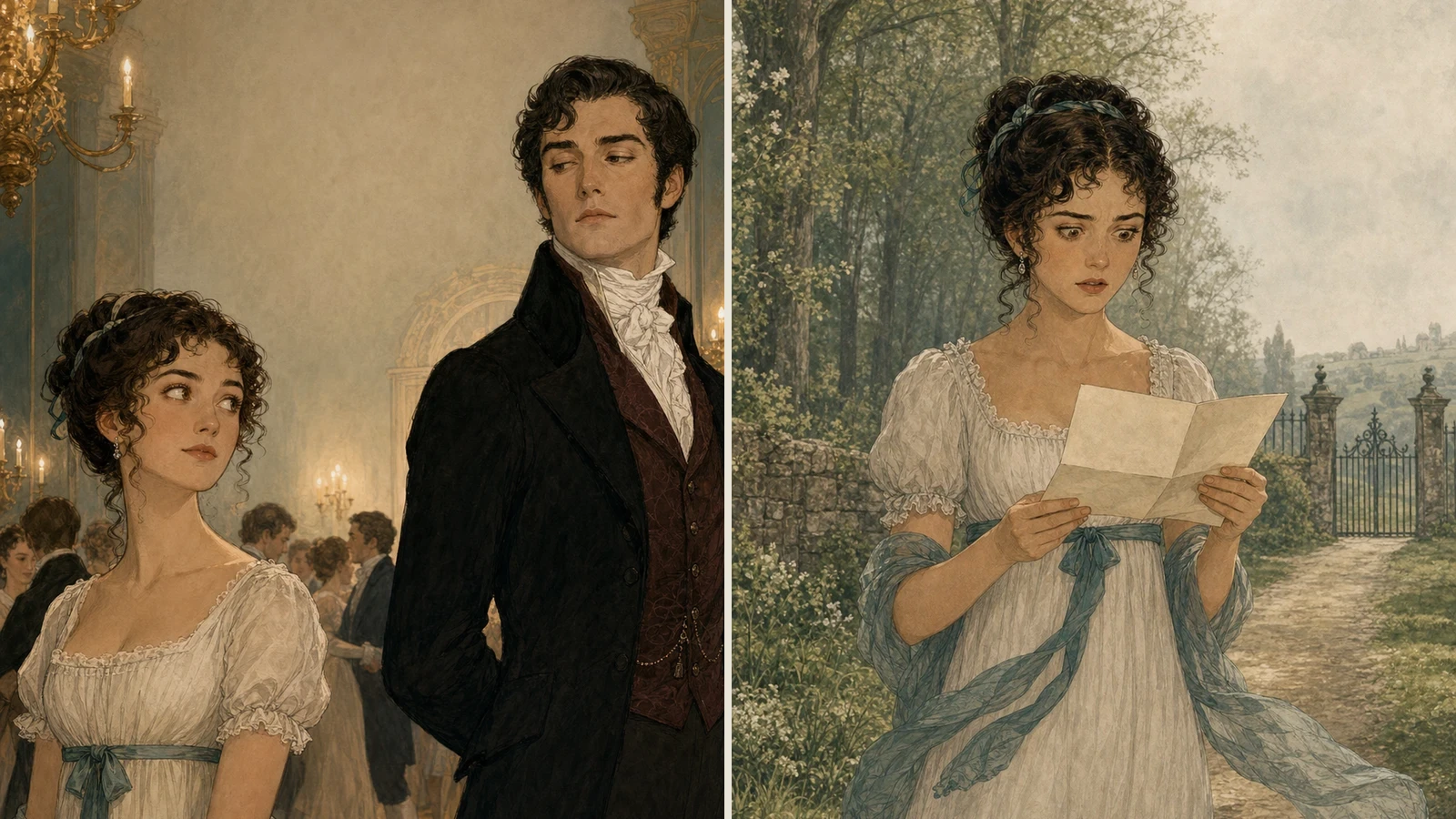
Readers who worry about old vocabulary usually settle in after a few chapters. Austen’s sentences are formal, but the action is easy to follow. A wealthy bachelor rents Netherfield. Mrs Bennet wants one of her daughters to marry him. Elizabeth meets Darcy, dislikes him, and soon finds several reasons to feel justified.
The harder task is deciding when the narrator agrees with Elizabeth and when Austen is showing that Elizabeth is wrong. The story stays so close to Elizabeth’s thoughts that her opinion can feel like fact. She believes Wickham because she is ready to like his story. She thinks worse of Darcy because each new detail seems to confirm what she already believes.
That is also where the comedy lives. Mr Bennet’s jokes sound clever until his refusal to act puts the rest of the family at risk. Mrs Bennet is noisy and ridiculous, but her fear has a practical basis: the Bennet daughters cannot inherit Longbourn. Elizabeth dislikes Charlotte Lucas’s choice, but Charlotte knows exactly how few choices she has.
You do not need to decode every ironic sentence. Keep one question nearby: who knows this firsthand? The question separates observation from gossip and makes the crowded early chapters much easier to follow.
The names worth fixing in memory are Elizabeth and Jane Bennet, Charles Bingley, Fitzwilliam Darcy, George Wickham, and Charlotte Lucas. Everyone else will become familiar through repetition. Austen is good at sending the same people back into a room under slightly worse conditions.
The letter changes the novel
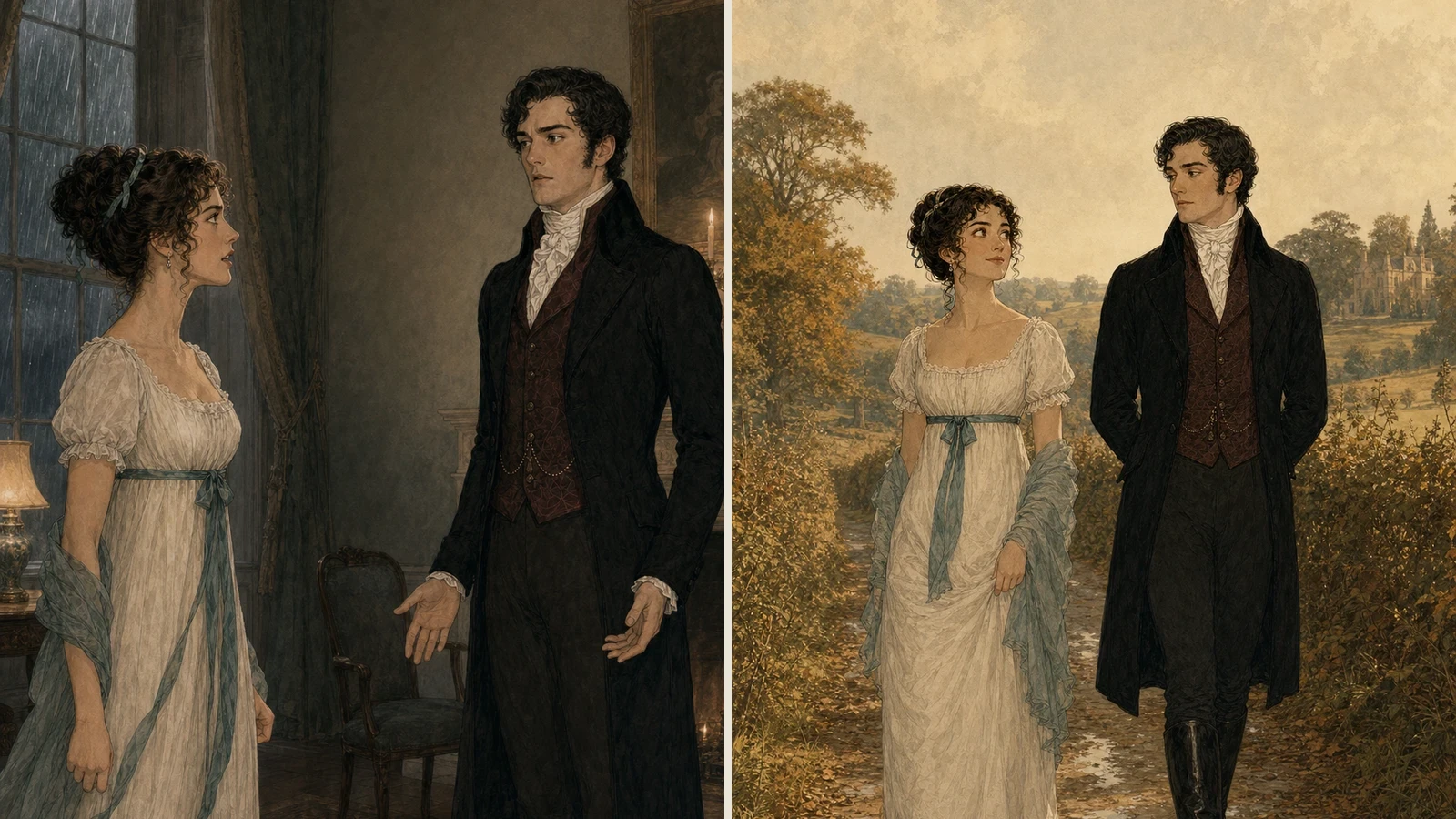
Darcy’s first proposal in Chapter 34 is the obvious midpoint, but the proposal alone changes very little. Both characters enter the scene armed with a private version of the other. They leave offended and still certain.
The following letter does the harder work. It gives Elizabeth claims she can test against memory. Wickham’s story begins to look rehearsed. Darcy’s interference between Jane and Bingley becomes more complicated. Elizabeth does not fall in love over the page. She loses confidence in the pleasure of always being right.
“Till this moment I never knew myself.”
Read Chapters 34~36 in one sitting if you can. They form a compact argument: accusation, evidence, reconsideration. The rest of the novel watches whether better judgment can become better conduct.
A 14 day plan that follows the drama
This schedule follows all 61 chapters in the Lita Book text. The portions are uneven because the story is uneven. The proposal and letter need more space than a run of short visits.
- Chapters 1~4. Meet the Bennets, Bingley, and Darcy. Notice how quickly a private insult becomes public knowledge.
- Chapters 5~9. Jane stays at Netherfield, giving Elizabeth and Darcy their first sustained chance to watch each other.
- Chapters 10~14. Conversation becomes a contest. Mr Collins arrives and changes the practical stakes for the Bennet sisters.
- Chapters 15~18. Wickham tells his story, then the Netherfield ball puts nearly every bad first impression in the same room.
- Chapters 19~23. Two proposals expose two very different ideas of marriage. Charlotte's decision deserves more attention than Elizabeth gives it.
- Chapters 24~28. Jane tries to live with her disappointment while Elizabeth travels to Hunsford and sees Charlotte's marriage up close.
- Chapters 29~33. Lady Catherine dominates Rosings. Darcy's repeated visits remain hard for Elizabeth to interpret.
- Chapters 34~36. Read the proposal and letter together, slowly. This is the novel's sharpest reversal.
- Chapters 37~42. Elizabeth goes home with a less flattering account of her own judgment, then leaves for Derbyshire.
- Chapters 43~46. Pemberley lets Elizabeth see Darcy without Wickham's narration between them. News from Longbourn breaks the calm.
- Chapters 47~50. Lydia's crisis shows that the family's careless behavior can cause lasting harm.
- Chapters 51~54. Explanations arrive indirectly. Watch what Darcy does when he has no reason to expect a reward.
- Chapters 55~58. Bingley returns, and Lady Catherine accidentally creates the possibility she wants to prevent.
- Chapters 59~61. Elizabeth and Darcy finally compare what each of them believed. Austen closes by returning to the families around them.
If 30~45 minutes is hard to protect, split each day in two. Two chapters with breakfast and two before bed still preserve the shape of most scenes.
Read for changes of mind, not hidden symbols
The novel becomes easier when you stop treating it like an exam. You do not need a separate color for every theme. Mark the moments when a character revises an opinion, refuses to revise it, or discovers that someone else has been acting on better information.
Letters deserve special attention because they change who controls the story. Before reading one, note what the recipient currently believes. Afterward, note which facts have changed and which feelings have not. That small habit makes Darcy’s letter, Jane’s letters from London, and Lydia’s news feel like action rather than exposition.
And let the jokes remain jokes. Austen can make a serious point while enjoying a terrible dinner guest, a pompous speech, or a mother who turns every event into a discussion of marriage. The characters learn painful lessons, but the rooms they occupy are still funny.
You can read Pride and Prejudice free through Project Gutenberg, Standard Ebooks, or in Lita Book’s timeless classics collection. The figures in this guide come from the Lita Book text: 122,129 words, 61 chapters, and an estimated 450 minutes.
Finished it already? Continue with twelve free books like Pride and Prejudice, chosen for their wit, social pressure, and badly managed first impressions.