
Why Persuasion Is the Austen Novel for Late Bloomers
Jane Austen's quiet final novel understands regret, second chances, and the courage it takes to trust your own judgment again.
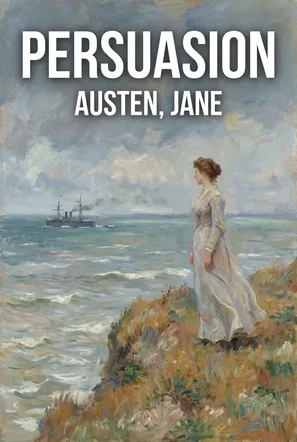
Persuasion is the Austen novel for anyone who worries that the decisive moment has already passed. Anne Elliot begins the book not with possibility but with the consequences of an old choice. What follows is a restrained, deeply hopeful story about recovering confidence in your own judgment.
What is Persuasion about?
Eight years before the novel begins, Anne Elliot is persuaded to end her engagement to Frederick Wentworth. He has talent and ambition, but no fortune or rank. When he returns as a successful naval captain, Anne is still living among relatives who scarcely notice her, while Wentworth appears determined to notice everyone else.
That premise sounds like a romance built on delay. Austen makes it something more exacting: a study of what regret does to attention. Anne reads rooms carefully because she has learned how much can remain unsaid inside them. A glance, a pause, or a chair moved closer can carry the force of an event.
Why does Anne Elliot feel so modern?
Anne is twenty-seven, an age her family treats as if the interesting portion of life were over. Yet the novel never confuses quietness with passivity. She manages practical crises, listens without surrendering her judgment, and gradually stops allowing louder people to define the meaning of her life.
Her growth is not a transformation into someone fearless. It is the slower achievement of acting while uncertainty remains. That makes her feel unusually close to a modern reader who has made a reasonable choice, watched it become a regret, and still has to decide what comes next.
Is Persuasion a sad book?
It is melancholy, but not defeated. Autumnal rooms, diminished fortunes, and missed timing give the novel its atmosphere. Against them, Austen places movement: ships returning, families relocating, friendships forming, and convictions changing.
The sadness matters because the second chance is not cheap. Anne and Wentworth cannot simply recover who they were at nineteen. They must meet again as people shaped by separation and decide whether those changes have made understanding possible.
The pleasure is in what remains unsaid
Readers coming from Pride and Prejudice may expect sparkling confrontation. Persuasion works at a lower volume. Its great scenes are crowded with other people, forcing private emotion into fragments. Austen lets the reader feel how intensely Anne listens for meaning while pretending not to listen at all.
This is why the novel rewards unhurried reading. Do not race toward the famous letter. Watch who speaks, who interrupts, and who makes room for Anne. The social choreography reveals the story before anyone declares it.
Who should read Persuasion next?
Choose Persuasion if you want a classic about adulthood rather than arrival. It is especially good for readers returning to fiction after a long pause: the novel is compact, emotionally legible, and rich enough to deepen on a second reading.
Most of all, read it when you need a book that respects regret without worshipping it. Austen does not promise that every lost chance returns. She offers the more useful hope that experience can sharpen judgment, and that a later choice may be freer because it is fully your own.